
I want to tell you about a specific feeling.
Not the Friday-night-with-nowhere-to-be kind of lonely. Not the moved-to-a-new-city-and-don’t-know-anyone kind. Those kinds of loneliness are real and they’re hard, but they at least make sense to other people when you describe them. Someone can look at your situation and understand why you’d feel that way.
The loneliness I’m talking about doesn’t make sense on paper. It lives inside full lives. Inside long marriages and close families and friendships that have lasted decades. It shows up in the middle of birthday dinners and holiday gatherings and group chats that never go quiet. It’s the feeling of being in a room full of people who genuinely, sincerely love you — and still feeling like nobody in the room actually knows you.
That’s the one. That’s the feeling I’m trying to put words to.
And for a lot of autistic people, that feeling is not occasional. It’s not situational. It’s just… Tuesday. It’s just what being in relationships has always felt like, and for a long time there was no language for it, and without language for it, the only available explanation was that something was wrong with you.
There wasn’t. There isn’t. But let me explain what’s actually going on.
The Loneliness Nobody Talks About
When people talk about autism and social struggles, the conversation usually goes one of two directions. Either it focuses on social skills deficits — the idea that autistic people struggle to connect because they don’t understand how — or it assumes autistic people prefer to be alone and loneliness isn’t really the issue.
Both of those framings miss the thing entirely.
Autistic people can crave closeness even while appearing distant. The loneliness doesn’t come from not wanting connection. It comes from their attempts to connect being consistently misunderstood, missed, or invalidated.
That’s the piece that changes everything when you finally hear it. The desire for connection is there. Often it’s enormous. Autistic people frequently feel things very intensely — love, loyalty, care — and want to be known and understood the same way anyone does. The problem isn’t the wanting. The problem is what keeps happening in the space between the wanting and the having.
Autistic people often report a particular kind of loneliness that isn’t simply the absence of people, but the absence of being genuinely understood — of feeling alien in rooms full of people who seem to operate by rules they never received.
Rules they never received. That’s exactly it. There is a social operating system that most neurotypical people run on without knowing they’re running it. Unspoken rules about how conversations are supposed to flow, what counts as an appropriate response to something, when to speak and when to stay quiet, what a person’s tone of voice means, what they actually want versus what they’re saying. Neurotypical people navigate this constantly and mostly unconsciously. They absorbed it somewhere along the way without realizing they were learning something.
Autistic people often don’t have that operating system. Or they have a different one. And when two people are running different systems, a lot gets lost in translation — not because either person is failing, but because the translation itself is genuinely hard.
When the People Who Love You Can’t Quite Read You
Here’s a thing that doesn’t get said enough: loving someone and understanding them are not the same thing.
You can love someone deeply — completely, genuinely, with your whole self — and still not be able to read them accurately. Still interpret their silence as anger when it’s just processing. Still miss the way they show affection because it doesn’t look like what you were expecting. You still spend years of a relationship or a friendship or a family dynamic feeling like you almost connect and then it slips, over and over, without either of you knowing exactly why.
This is what researchers have started calling the double empathy problem, and it’s one of the most important things to understand about autistic social experience. The name comes from Dr. Damian Milton, a British researcher who is autistic himself, and the basic idea is this: the communication difficulties that autistic people experience in relationships with neurotypical people are not one-directional.
And get this:
The double empathy problem proposes that empathy difficulties are bidirectional between autistic and non-autistic people. Neurotypical people struggle to accurately read and understand autistic people just as much as the reverse — they’re just never told this, because the deficit model of autism places the communication problem entirely on the autistic person.
Research showed non-autistic participants had significantly lower empathic accuracy scores when trying to understand autistic narrators compared to non-autistic ones. In other words: neurotypical people are not particularly good at understanding what autistic people are experiencing, either. The gap goes both ways.
And yet the autistic person is the one who gets told they need to work on their social skills. The autistic person is the one sent to therapy to learn to communicate better. The autistic person is the one who internalizes the message that the repeated failures of connection are their fault.
They’re not. They were never entirely the autistic person’s fault. It was always a translation problem between two different ways of being in the world.
I want you to sit with that for a second if you need to. Because some of you have been carrying this as a personal failing for a very long time.
What It Actually Feels Like From the Inside
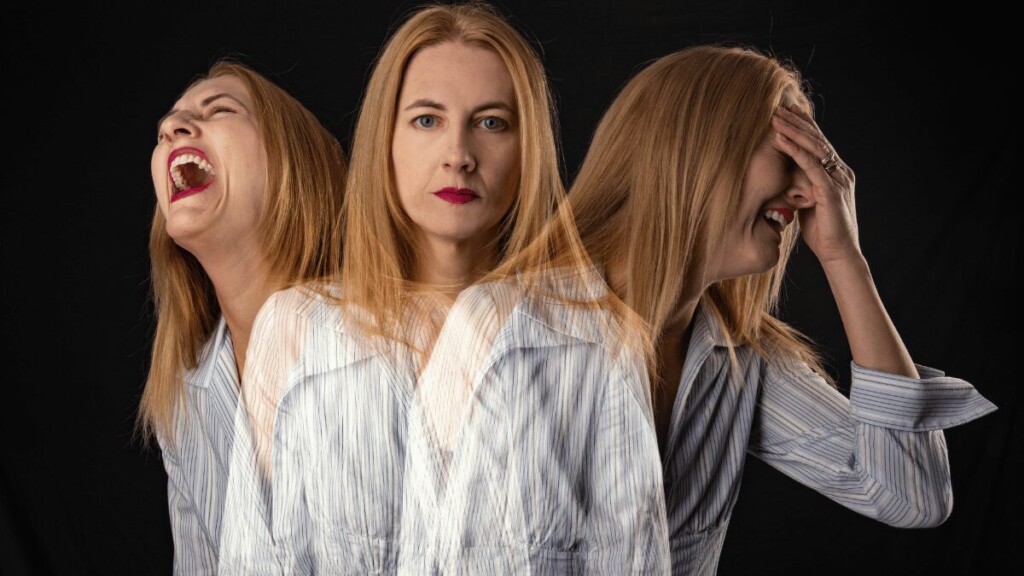
Let me be specific, because “feeling unseen” can sound abstract until you put the actual texture of it into words.
It feels like being in a conversation where you said the right thing — you checked, you thought it through, you used the words that should fit — and somehow it still landed wrong, and you don’t know why, and neither does the other person, and you both walk away vaguely unsatisfied and can’t articulate what was missing.
It feels like having an enormous internal experience of something — joy, grief, love, overwhelm — and not being able to get it from the inside to the outside in a form that other people can receive. One autistic person described it like this: “I feel love at people. My face may not show it, and I might not say the words, but I feel it like a tidal wave of warmth and rushing emotion. I do express it — but empathically, through literally sending that loving energy from my soul to theirs. I didn’t realize for a long time that most people didn’t do this, and even if I really cared for someone, they’d be unaware of it — or even think I disliked them — because they couldn’t feel what I was sending.”
That’s not all:
That is one of the most accurate descriptions I have ever read of what it’s like to love someone autistically and have that love not translate. You’re sending everything you have. The other person receives nothing, or something they can’t interpret correctly. And you both end up lonely in the same relationship.
It also feels like being known for the version of yourself you perform rather than the version you actually are. When you mask — suppressing stimming, forcing eye contact, pre-scripting responses, mirroring the social register of the people around you — you can build relationships that work at a surface level. People like you. But they like the masked version. The friendships are built on a performance you can’t sustain indefinitely, which means you’re always, at some level, alone inside them.
Masking can create a sense of loneliness where relationships feel inauthentic, leaving the person feeling like they can’t truly be themselves — or that others don’t truly know them.
You’re loved. You’re genuinely loved. And it is a specific, quiet agony to be loved by people who are responding to the performance rather than the person underneath it.
Why This Hits Different in Families
I want to talk about families specifically, because I think this is where the loneliness gets most complicated and least acknowledged.
In friendships, you can choose your people. You can find the ones who get you, build your circle around them, and limit your exposure to the ones who don’t. It’s not always easy but it’s possible. In families, you don’t get that choice. You’re placed into a system of relationships at birth, and those relationships come with their own long histories, their own dynamics, their own embedded assumptions about who you are.
For a lot of autistic people — especially those diagnosed late, or not diagnosed at all — family is the place where the loneliness has the longest roots.
Because your family has known you your whole life. They love you. They have years of memories with you. And they also have years of misreading you. Years of interpreting your meltdowns as tantrums, your silence as rudeness, your bluntness as being unkind, your overwhelm as overreacting. Years of thinking they understand you because they’ve been watching you — without knowing that what they were watching was mostly the mask.
And then you get diagnosed, or you start learning about autism and recognize yourself, and you understand for the first time why so much of your life has felt like this. Why family dinners are exhausting in a way that doesn’t make sense to anyone else. Why certain conversations always go sideways in the same way. Also why you love these people and still leave every gathering feeling hollowed out.
You want to explain it. And sometimes you try. Sometimes it lands, and that changes things, and it’s one of the most relieving things in the world. And sometimes it doesn’t land — because poor social interactions with non-autistic people across a lifespan, due to the double empathy problem, contribute directly to poor mental health in autistic people over time. The misunderstanding isn’t a single event. It’s cumulative. It layers.
The Part About Wanting Connection and Not Getting It in the Forms It Comes In

The loneliness autistic people experience isn’t usually about lacking connection — it’s about a consistent gap between the connection you want and the forms it’s available in.
This is so important I want to stay with it for a minute.
The forms connection usually comes in are: large noisy social gatherings where sensory overload makes genuine connection nearly impossible. Small talk that feels pointless to autistic people who prefer depth. Friendship maintenance rituals — the check-in texts, the casual hangouts, the social performances of closeness — that take enormous executive function to sustain. Emotional conversation styles that assume a certain kind of verbal fluency with feelings that a lot of autistic people, especially those with alexithymia, genuinely don’t have.
And then there are the forms that work better for a lot of autistic people: deep conversations about things that actually matter. Connection through shared interests and parallel activity. Direct, honest communication without the layers of subtext. Relationships where you don’t have to manage how you’re being perceived every second. Spaces where stimming is allowed and nobody reads your facial expression wrong and you don’t have to translate yourself.
These forms of connection are real. They work. Research has found that when two autistic people interact, information transfer is highly effective — comparable in efficiency to neurotypical-to-neurotypical communication. The connection problem isn’t that autistic people can’t connect. It’s that most of the available infrastructure for connection was built for a different kind of brain.
Which means a lot of autistic people spend their lives trying to access connection through a door that doesn’t quite fit them, never understanding why it’s so much harder for them than it seems to be for everyone else.
What This Does to Mental Health Over Time
I’m not going to soften this part because I think it matters too much to soften.
Loneliness has been shown to contribute to low self-esteem and extremely high levels of depression, self-harm, and suicidality in autistic people. This is not a fringe finding. It shows up consistently across the research.
Thirty-six percent of autistic people have experienced suicidal thoughts. Eighteen percent have made a plan.
These numbers exist inside a population that is also more likely to be undiagnosed, less likely to receive appropriate mental health support, more likely to be in therapy that was designed for neurotypical brains and therefore doesn’t quite work, and more likely to have internalized the message that the chronic difficulty of their social lives is their own fault.
That is a lot of compounding. And the loneliness that lives inside relationships — the kind that doesn’t have an obvious external cause, the kind that’s hard to explain to the people around you because they love you and you know they love you and you still feel this way — that particular kind of loneliness can be especially hard to get help for, because it doesn’t look like a crisis from the outside. You’re not isolated. You have people. You’re just not quite reached by them, and that’s a much harder thing to name.
If you’re in this: please talk to someone. A neurodivergent-affirming therapist who actually understands autism, not a clinician who’s going to try to train the autistic out of you. The resources page on this site has some starting points if you’re not sure where to begin.
The Relief of Autistic Community
I want to end on this because I think it’s the most practically useful thing I can say.
Autistic people often feel less lonely when they’ve learned about autism and the specific ways it affects them — not by masking symptoms or trying to mold themselves into someone else. Being part of a community with other autistic people helps.
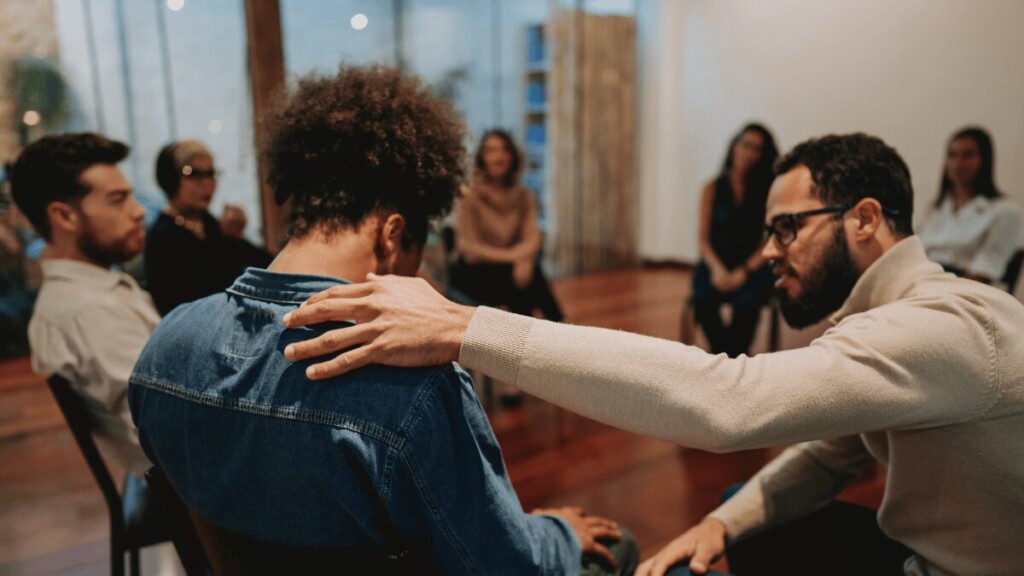
There is a specific relief that comes from being in a room — physical or virtual — with other autistic people. It’s hard to describe if you haven’t experienced it. The absence of the constant translation work. It’s conversations that don’t require you to manage how you’re coming across. It’s people who understand what you mean when you say something, who laugh at the right things, who don’t need you to explain yourself in three different ways before they get it.
Autistic people benefit enormously from safe spaces where they can truly be themselves — research consistently shows this reduces loneliness and increases belonging and wellbeing.
Finding your people — actual autistic community, people who are wired like you — is not a consolation prize for failing at neurotypical relationships. It is its own complete thing. And for a lot of autistic people, it is the first time in their lives they understand what connection is supposed to feel like. The first time they don’t have to translate. The first time being fully themselves didn’t cost them the relationship.
I want that for you. I want it badly.
One Last Thing
If you’re neurotypical and you love an autistic person — a partner, a kid, a sibling, a friend — I want to say this directly to you too:
The fact that they feel lonely in your relationship doesn’t mean you’re failing at love. It means the two of you are operating on different systems and the translation is hard. That’s not a character flaw in either of you.
But it does mean the work of learning each other has to go both ways. You have to be as willing to learn how they communicate just as they’ve been trained to learn how you communicate. Also have to believe them when they tell you what they need, even when it looks different from what you expected. You have to be willing to understand that “I love you” might sound like remembering your coffee order every single day for ten years, or researching the thing you mentioned once that you were interested in, or sitting with you in silence because your presence matters even when words are too much.
It’s not about being perfect. It’s about being curious, kind, and willing to grow together.
That’s it. That’s the whole thing.
You are not broken because connection has been hard. You have been trying to plug into an outlet that wasn’t made for your plug. That is a fixable problem, and it starts with knowing that’s what it is.
You are not too much, you are not not enough, and you are not bad at love or bad at friendship or fundamentally unsuitable for connection.
You just needed someone to tell you that the translation was always the problem. Not you.
Now you know.
Keep reading: → Who Were You Before You Learned to Disappear? Autism, Masking, and the Long Work of Finding Yourself → Nobody Warned Me That Getting the Diagnosis Would Break Something Open → The Autism Diagnosis Gap: Race, Gender, and Who Gets Missed → What I Wish My Family Knew About PDA / Pervasive Drive for Autonomy